
Samsung Watch Ultra: Extreme Durability, Sensors, and Performance Review
“An in-depth review of the Samsung Watch Ultra, exploring its titanium construction, bioactive sensor accuracy, dual-frequency GPS, and expedition endurance.”
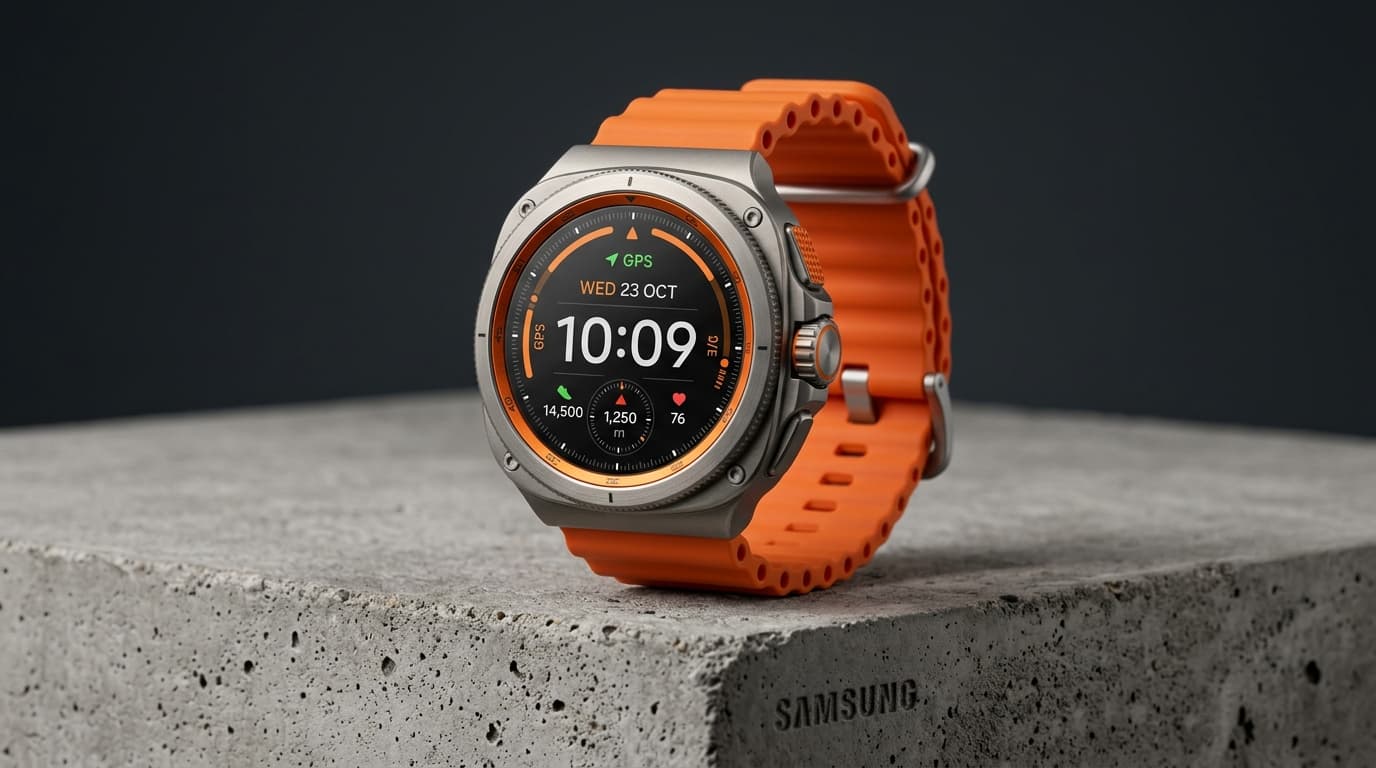
The premium wearable market has entered an aggressive era of specialized industrial endurance, marked by ruggedized materials, extreme-environment biometric arrays, and extended battery architectures tailored for demanding outdoor expeditions. The emergence of the Samsung Watch Ultra represents an ambitious evolution in high-end smartwatch design, directly challenging established athletic benchmarks through aerospace-grade titanium fabrication and dual-frequency GPS navigation. Enthusiasts comparing high-performance mobile ecosystems will find natural synergy between premium wearable hardware and high-performance handheld flagships, as explored in our comprehensive breakdown of the samsung galaxy a56 5g which details the company modern design language and software integration strategies.
Engineering resilience serves as the core cornerstone of this ruggedized wearable platform, featuring a cushion-shaped titanium frame engineered to absorb physical shock while safeguarding an elevated sapphire crystal display. The high-luminance panel achieves peak outdoor legibility under direct high-altitude sunlight, ensuring tactical coordinates and physiological telemetry remain immediately readable during demanding athletic pursuits. Water resistance ratings have been fortified to withstand rigorous aquatic activities and ocean swimming, supported by a specialized dynamic lug design that secures robust marine straps firmly against the wrist during intense physical motion.
Beneath its resilient exterior casing lies an upgraded bioactive biometric sensor cluster engineered to track complex metabolic signals and cardiovascular performance with surgical precision. Athletes can monitor advanced glycation end products, continuous blood oxygen saturation levels, micro-vascular metrics, and sleep architecture variations through optimized low-latency data processing algorithms. The inclusion of multi-band satellite connectivity ensures uninterrupted tracking across dense urban canyons and remote backcountry trails where single-frequency positioning modules frequently experience signal drift or navigational degradation.
Power endurance remains a vital metric for expedition-grade wearables, where extended multi-day battery retention often determines the practical utility of remote navigational systems. By pairing a high-capacity cell with intelligent operating system power modes, users can undertake prolonged wilderness treks without carrying supplementary charging docks. Prospective buyers evaluating portable digital devices alongside luxury mobility gear can review our analysis of best smartphones 2025 to assemble a unified technology suite that combines extreme physical durability with refined digital luxury.

About the Contributor
Julian Vance-Moreau
Executive Editor-at-Large covering central bank bullion, high-horology, and sovereign wealth portfolios across Zurich, London, and Dubai.
Related Intelligence in Tech & Innovation
View Category →
Tech & Innovation
The Evolution of Smart Phones: Flagship Innovation and Buying Intelligence
Explore the defining breakthroughs in modern smart phones, from generative AI silicon and periscope optical zoom systems to foldable engineering and battery endurance.
Sep 13, 2026 6 min read
Tech & Innovation
Samsung Galaxy A56 5G: Mid-Range Flagship Specs, Camera, and Value Analysis
Explore Samsung Galaxy A56 5G specifications, 4nm processor efficiency, OIS camera performance, AMOLED display, and software support.
Sep 22, 2026 8 min read

Tech & Innovation
Character AI Alternatives: The Best Free Conversational AI Platforms
Discover the premier character ai alternatives offering unrestricted creative roleplay, persistent memory windows, and private open-weight models.
Sep 18, 2026 8 min read