
Best Gaming Mouse: Precision Sensors, Ergonomic Balance, and Esports Hardware
“Explore the best gaming mouse options for esports competitors, comparing optical sensor precision, sub-60g lightweight shells, and 8000Hz polling tech.”
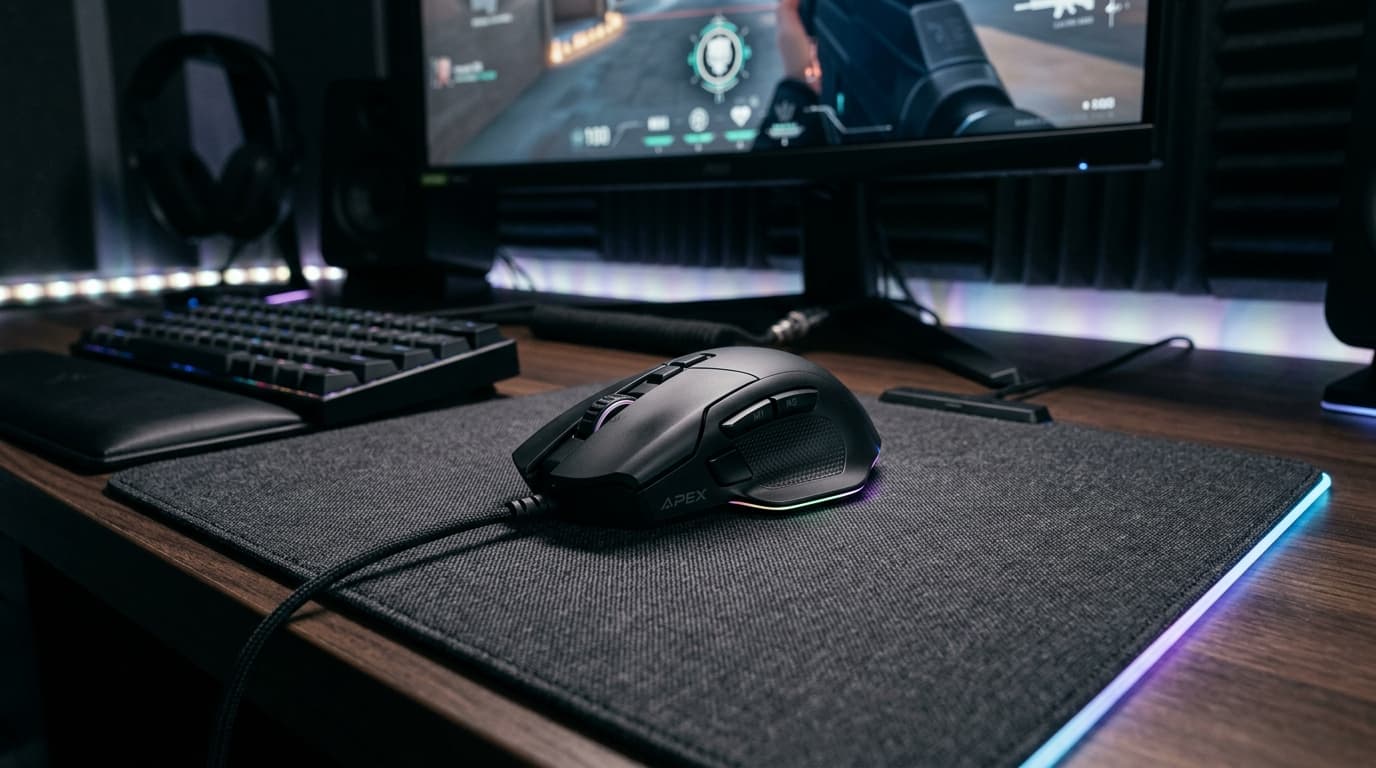
The Biomechanical Demands of High-Stakes Competitive Esports
In the intensely competitive arena of digital esports, victory is frequently determined by fractions of a millisecond, rapid cognitive reflexes, and flawless physical peripherals capable of translating biometric hand movements into pixel-perfect crosshair placement. Discerning competitors searching for the best gaming mouse must navigate an advanced hardware landscape dominated by sub-millisecond wireless protocols, optical switch mechanisms, flawless tracking sensors, and ultra-lightweight ergonomic chassis designs. Pairing a tournament-grade mouse with other high-efficiency mobile technology, such as the power-efficient silicon architectures detailed in our analysis of iphone 17 battery life, showcases how relentless engineering optimization has elevated modern consumer electronics.
A gaming peripheral is far more than a simple pointing device; it is a direct extension of a competitive player motor nervous system. Flawless tracking accuracy, uncompromised structural rigidity, and customized weight balance dictate whether an athlete can maintain consistent aiming mechanics across grueling multi-hour tournament brackets. Understanding the technical nuances of modern sensor arrays, switch actuation mechanics, and ergonomic form factors is essential for securing a tangible competitive advantage.
Flawless Optical Sensors and Polling Rate Revolution
The technological centerpiece of any premier gaming peripheral resides in its optical sensor array. Contemporary flagship sensors deliver native resolution capabilities exceeding thirty thousand dots per inch, accompanied by tracking speeds surpassing seven hundred inches per second at acceleration tolerances exceeding fifty Gs. However, experienced esports professionals prioritize tracking fidelity over raw sensitivity numbers, demanding zero artificial smoothing, zero angle snapping, and zero acceleration that could corrupt muscle memory during rapid flick shots.
Furthermore, transmission polling rates have evolved from traditional one-thousand-hertz baselines to four-thousand and eight-thousand-hertz high-polling standards. By transmitting up to eight thousand positional telemetry packets every single millisecond to the host computer, high-polling gaming mice virtually eliminate input latency and deliver extraordinarily smooth cursor trajectories on high-refresh-rate esports monitors, ensuring that target tracking mirrors hand motion with absolute fidelity.
The Physics of Ultra-Lightweight Ergonomics and Grip Geometry
Chassis weight and mass distribution fundamentally govern aiming fatigue and micro-adjustment control during prolonged gaming sessions. Modern peripheral engineering has migrated decisively toward ultra-lightweight composite structures weighing under sixty grams, achieved without compromising shell structural integrity or relying on open honeycomb perforations that expose internal electronics to dust and moisture.
Selecting the optimal mouse geometry depends directly upon an athlete specific grip style. Palm grip competitors require ergonomic asymmetrical contours that provide full support for the metacarpal arch and fingers, minimizing tendon strain during long matches. Conversely, claw and fingertip grip players favor symmetrical, low-profile designs that maximize agility, allowing the fingers to execute rapid micro-adjustments with zero palm interference. Premium virgin-grade polytetrafluoroethylene mouse skates with rounded bevel edges complete the structural chassis, providing frictionless glide across cloth and glass mousepads alike.
Optical Microswitches Versus Mechanical Contacts
Button click latency and long-term switch durability represent critical considerations in tournament environments. Traditional mechanical switches utilize physical metal leaf contacts that inevitably develop microscopic oxidation and metal fatigue over time, often resulting in delayed switch response or catastrophic accidental double-clicking malfunctions. Modern premier gaming mice have largely abandoned mechanical contacts in favor of optical switch technology.
Optical switches utilize an infrared light beam that is interrupted by a mechanical shutter upon button actuation. Because electrical registration occurs at the speed of light without requiring physical metal debouncing delays, click registration occurs almost instantaneously. Furthermore, the absence of mechanical contact wear extends switch lifespans to over seventy million clicks, ensuring rock-solid actuation reliability through years of intensive competitive competition.
Wireless Protocol Integrity and Tournament Reliability
Fierce debate between wired and wireless peripherals has been definitively resolved by proprietary low-latency radio frequency technologies. Modern wireless gaming mice utilize hardened 2.4-gigahertz transmission bands that dynamically hop across frequencies to avoid interference in crowded tournament arenas, achieving lower input latency figures than many legacy wired peripherals. Detachable lightweight paracord cables provide emergency charging without impeding movement, ensuring uncompromised competitive readiness.
Ultimately, selecting the best gaming mouse requires identifying a harmonious balance of ergonomic shell geometry, flawless optical sensor calibration, instant optical switch actuation, and featherlight physical balance. By investing in a peripheral engineered to complement personal biomechanics, competitive players can elevate their aiming consistency, prevent physical fatigue, and achieve their full potential across the global esports stage.

Julian Vance-Moreau
Executive Editor-at-Large covering central bank bullion, high-horology, and sovereign wealth portfolios across Zurich, London, and Dubai.
Related Intelligence in Tech & Innovation
View Category →
The Evolution of Smart Phones: Flagship Innovation and Buying Intelligence
Explore the defining breakthroughs in modern smart phones, from generative AI silicon and periscope optical zoom systems to foldable engineering and battery endurance.
Samsung Galaxy A56 5G: Mid-Range Flagship Specs, Camera, and Value Analysis
Explore Samsung Galaxy A56 5G specifications, 4nm processor efficiency, OIS camera performance, AMOLED display, and software support.

Character AI Alternatives: The Best Free Conversational AI Platforms
Discover the premier character ai alternatives offering unrestricted creative roleplay, persistent memory windows, and private open-weight models.